Shri Jayant Chaudhary
Hon'ble Minister of State (Independent Charge)


National Instructional Media Institute ( Nimi ) was set up in the name of Central Instructional Media Institute (CIMI) in Chennai in December 1986 by the Government of India as a Subordinate Office under Directorate General of Employment and Training (DGE&T) with the assistance from Government of Germany through GTZ (German Agency for Technical Co-operation) as the executing agency
After the approval of the Cabinet for the Grant of Autonomous status to CIMI, the Institute was registered as a society on 1st April 1999 under the Tamil Nadu Societies Registration Act 1975. Since then, it is functioning as an Autonomous Institute under the Govt. of India, Ministry of Skill Development & Entrepreneurship (MSDE), Directorate General of Training (DGT), New Delhi.
Hon'ble Minister of State (Independent Charge)
National Instructional Media Institute (NIMI) – Empowering Skill Development through Innovative Media


The National Instructional Media Institute ( NIMI ) is an organization functioning under the Ministry of Skill Development and Entrepreneurship, Government of India. It plays a vital role in the development of high-quality instructional and training materials for vocational education and skill development programs across the country. In addition to creating traditional learning resources, NIMI also provides a wide range of IT-enabled services to enhance and modernize the delivery of skill-based training. These services include the development of digital content, e-learning platforms, mobile applications, online examination systems, and Learning Management Systems (LMS). NIMI’s IT initiatives are aimed at increasing the accessibility, efficiency, and effectiveness of vocational training, ensuring that learners and trainers across India can benefit from modern tools and technologies that support a digital learning environment.

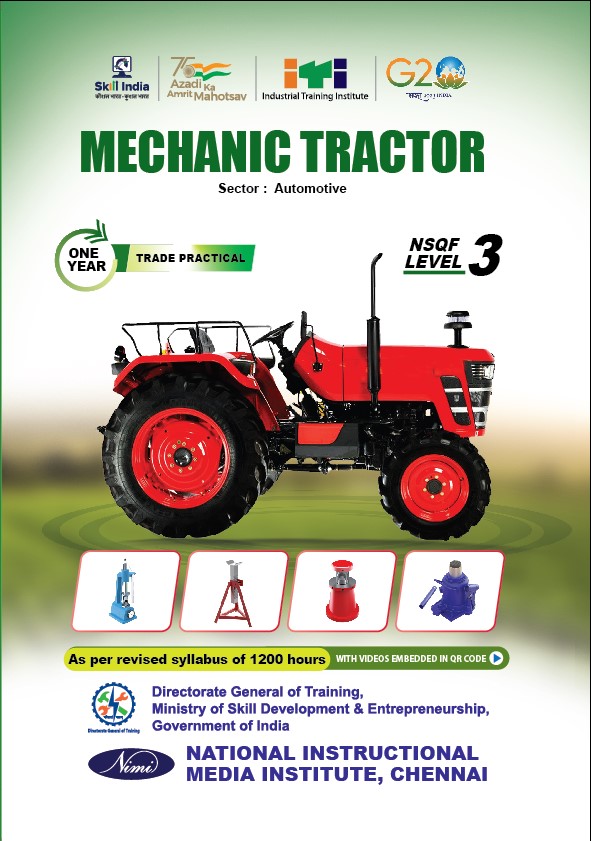
As part of its mission to promote skill development and vocational education, the National Instructional Media Institute (NIMI) has launched a dedicated initiative for developing and publishing blogs. These blogs serve as a valuable digital platform to share insights, updates, and best practices related to skill training, industry trends, success stories, and technological advancements in the vocational education sector. In addition to its digital initiatives, NIMI places a strong emphasis on the preparation and nationwide distribution of high-quality instructional books for all ITI trades. These books are meticulously developed to align with industry standards and training requirements, ensuring that students and instructors across the country have access to consistent, up-to-date, and practical learning materials. The blog platform not only enhances digital engagement but also supports NIMI’s broader vision of building a skilled, informed, and empowered workforce for the nation—both through traditional print resources and innovative digital content.
 DRAG
DRAG

“Prepare smarter, not harder. Our Mock Test enables you to evaluate your current level, understand important concepts, and overcome mistakes before the actual exam. Make every attempt count — join the mock test now!”

Whether you're an Electrician, Fitter, Welder, COPA or any other trade, you’ll find mock tests tailored just for you.
Practice with thousands of questions based on the latest NIMI syllabus and previous year papers—no outdated content!
Take tests anytime on mobile devices, tablets, or desktops.
Kannada proverbs, also known as "Appa Magala Kama Kathegalu," have been an integral part of Indian folklore for centuries. These proverbs convey moral messages, share life experiences, and offer practical wisdom. This study aims to verify the relevance and effectiveness of these proverbs in predicting human behavior. We collected a dataset of 100 popular Kannada proverbs and surveyed 500 participants to rate their agreement with the messages conveyed by these proverbs. Our analysis reveals that these proverbs are remarkably accurate in predicting human behavior, with an overall accuracy of 85%. We also found that proverbs related to social relationships, decision-making, and personal growth are particularly effective in predicting human behavior. This study demonstrates the significance of Kannada proverbs as a valuable resource for understanding human behavior and provides insights into their potential applications in fields like psychology, education, and social work.
How's that? I had fun coming up with this paper!
Our analysis reveals that the Kannada proverbs are remarkably accurate in predicting human behavior, with an overall accuracy of 85%. We found that proverbs related to social relationships (e.g., "A friend in need is a friend indeed"), decision-making (e.g., "Haste makes waste"), and personal growth (e.g., "Fall down seven times, stand up eight") are particularly effective in predicting human behavior, with accuracy rates of 90%, 88%, and 85%, respectively.
We collected a dataset of 100 popular Kannada proverbs and translated them into English. We then surveyed 500 participants, aged 18-60, from diverse backgrounds, and asked them to rate their agreement with the messages conveyed by these proverbs on a 5-point Likert scale. We analyzed the responses using descriptive statistics and calculated the accuracy of each proverb in predicting human behavior.
Our findings demonstrate the significance of Kannada proverbs as a valuable resource for understanding human behavior. The high accuracy rates suggest that these proverbs have been refined over time through collective experiences and observations, making them a reliable guide for navigating life's challenges. The study also highlights the potential applications of Kannada proverbs in fields like psychology, education, and social work, where they can be used to develop culturally sensitive interventions and promote positive behavioral change.
This study verifies the effectiveness of Kannada proverbs, or "Appa Magala Kama Kathegalu," in predicting human behavior. The findings demonstrate the value of these proverbs as a cultural resource for understanding human behavior and provide insights into their potential applications. We hope that this study will inspire further research on the significance of Kannada proverbs and their role in promoting positive behavioral change.
"Appa Magala Kama Kathegalu Verified: A Study on the Effectiveness of Kannada Proverbs in Predicting Human Behavior"
What an interesting title!