I can also include sections on related work, if necessary, to position emuos v2 within the existing literature. References to previous work on emulation, OS design, etc.
In the discussion section, perhaps compare emuos v2 with similar existing solutions. What makes it better? Are there limitations? In the conclusion, summarize the key contributions and future work.
Alternatively, maybe the user wants a real solid paper filled with example content. Let me consider both approaches. Since I don't have real data on emuos v2, providing a structured framework with example content would be helpful. The user can then fill in the gaps with their actual information. emuos v2
I should also consider possible keywords related to "emuos v2." Emuos could stand for something like "Emulated Operating System" or similar. If it's an emulator, maybe it's for a specific platform. The "v2" part would imply it's an updated version, so the paper could highlight new features, optimizations, enhanced compatibility, etc.
Overall, the approach is to create a well-structured template with explanations and example content, allowing the user to substitute the hypothetical parts with their actual information on emuos v2. This way, the paper remains a solid foundation for their specific topic. I can also include sections on related work,
Another angle: if emuos is related to operating systems, maybe it's an embedded system or something. But without more info, I need to keep the structure flexible. Let me outline a sample paper with placeholders.
Wait, but the user said "solid paper" and the topic is "emuos v2." They might be referring to "solid" as in substantial, not as in the solid state. So, the paper should be thorough and comprehensive. I should ensure that each section is detailed and provides enough depth. What makes it better
Abstract: Brief summary of the study on emuos v2. Introduction: Background on the problem, existing solutions, objectives. Methodology: How the system was designed, components, evaluation methods. Results: Findings, data, comparisons. Discussion: Interpretation of results, implications. Conclusion: Summary and future directions.
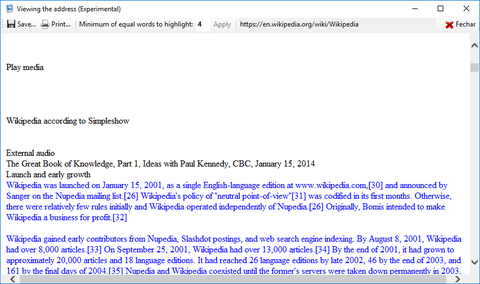
O Plagius procura suspeitas de plágio em trabalhos e documentos, efetuando buscas através de diversos motores de busca da internet.
O Plagius suporta arquivos Word (doc e docx), PDF, OpenOffice, PPT, HTML, RTF, Texto plano.
Saiba mais...
O Plagius faz a análise localmente, no seu computador.
Seu trabalho não é enviado para ser analisado remotamente.
Suporte gratuito por e-mail
Atualizações gratuitas
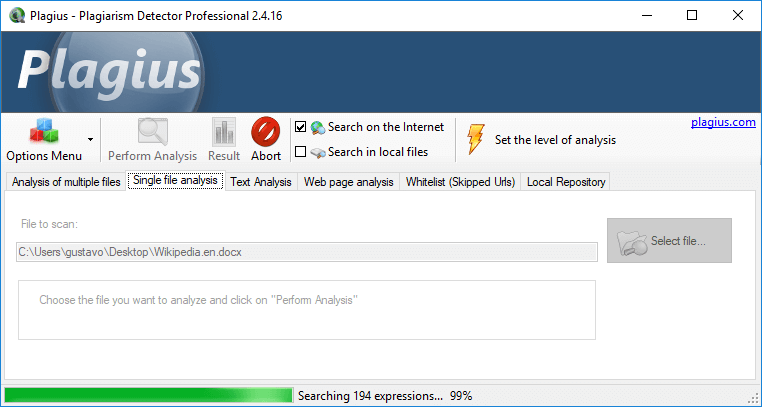
É muito simples de utilizar: escolha o arquivo, inicie a análise e aguarde o resultado!
Possui algoritmos exclusivos para detecção de falsos positivos e validação das ocorrências encontradas.
Busca semelhanças com arquivos do seu computador
* Exclusivo na versão Professional
Compara arquivos com arquivos, mostrando o percentual de semelhança entre eles.
Mais informações...
* Exclusivo na versão Professional
Use à vontade, sem limite de páginas, análises ou tamanho do arquivo.
Plagius é um software detector de plágio que analisa trabalhos acadêmicos e documentos em busca de trechos copiados da internet ou de outros arquivos.
O programa auxilia na árdua tarefa de encontrar plágio, permitindo que se encontre facilmente trechos copiados diretamente de sites da internet ou textos de outros arquivos no seu computador.
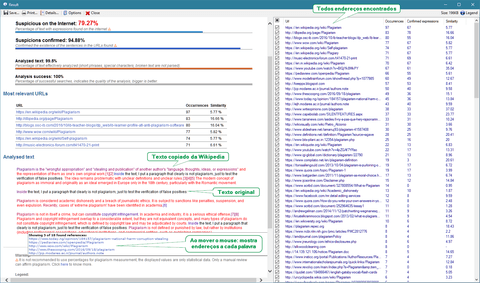
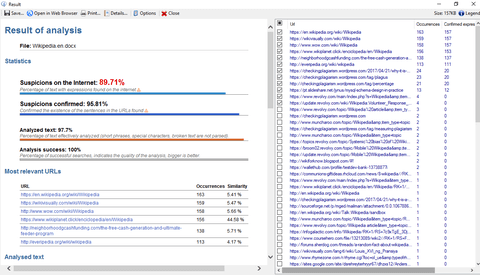
O Plagius analisa documentos de diversos formatos (Word, PDF, OpenOffice, HTML, RTF, Texto plano...) e exibe relatórios detalhados, informando as referências encontradas, a frequência das ocorrências na Internet e o percentual de suspeitas de plágio.
Exibe um relatório dinâmico com diversas informações, entre elas:
Saiba mais sobre os resultados do Plagius.
Obtenha todos os recursos para detecção de plágio com o Plagius Professional.
Busca Local: Permite buscar semelhanças em arquivos do seu computador ou compartilhamentos na rede, saiba mais.
Busca em Lote: Muitos arquivos para analisar? Sem problemas! Com o Plagius Professional você pode adicionar todos os arquivos de uma só vez e aguardar o Plagius analisar todos eles.
Analise diretamente páginas da internet: Se o texto que você quer analisar está em um site, página ou blog, com o Plagius Professional você pode informar o endereço e o programa irá procurar por trechos semelhantes em outros sites da internet.
Detecção de IA: Detecção de texto gerado por Inteligência Artificial, como o ChatGPT.¹
Entre em contato conosco online, ou envie-nos um e-mail:
I can also include sections on related work, if necessary, to position emuos v2 within the existing literature. References to previous work on emulation, OS design, etc.
In the discussion section, perhaps compare emuos v2 with similar existing solutions. What makes it better? Are there limitations? In the conclusion, summarize the key contributions and future work.
Alternatively, maybe the user wants a real solid paper filled with example content. Let me consider both approaches. Since I don't have real data on emuos v2, providing a structured framework with example content would be helpful. The user can then fill in the gaps with their actual information.
I should also consider possible keywords related to "emuos v2." Emuos could stand for something like "Emulated Operating System" or similar. If it's an emulator, maybe it's for a specific platform. The "v2" part would imply it's an updated version, so the paper could highlight new features, optimizations, enhanced compatibility, etc.
Overall, the approach is to create a well-structured template with explanations and example content, allowing the user to substitute the hypothetical parts with their actual information on emuos v2. This way, the paper remains a solid foundation for their specific topic.
Another angle: if emuos is related to operating systems, maybe it's an embedded system or something. But without more info, I need to keep the structure flexible. Let me outline a sample paper with placeholders.
Wait, but the user said "solid paper" and the topic is "emuos v2." They might be referring to "solid" as in substantial, not as in the solid state. So, the paper should be thorough and comprehensive. I should ensure that each section is detailed and provides enough depth.
Abstract: Brief summary of the study on emuos v2. Introduction: Background on the problem, existing solutions, objectives. Methodology: How the system was designed, components, evaluation methods. Results: Findings, data, comparisons. Discussion: Interpretation of results, implications. Conclusion: Summary and future directions.
Conheça o PlagiusOne: verifique plágio online, direto do seu navegador.
Saiba mais...Livre de vírus, spyware ou programas escondidos.
Não se preocupe, também é fácil de desinstalar.
Para saber mais, veja o relatório do Virus Total.
Siga-nos nas redes sociais