

SMTP & Email API Test Utility
A free, native tool for testing SMTP relay servers and email API providers. Built for email administrators, developers, and IT professionals who need to quickly verify email delivery configurations.
Windows, macOS & CLI available now
Clean, intuitive interface designed for professionals. Test SMTP servers, preview HTML emails, and diagnose delivery issues.
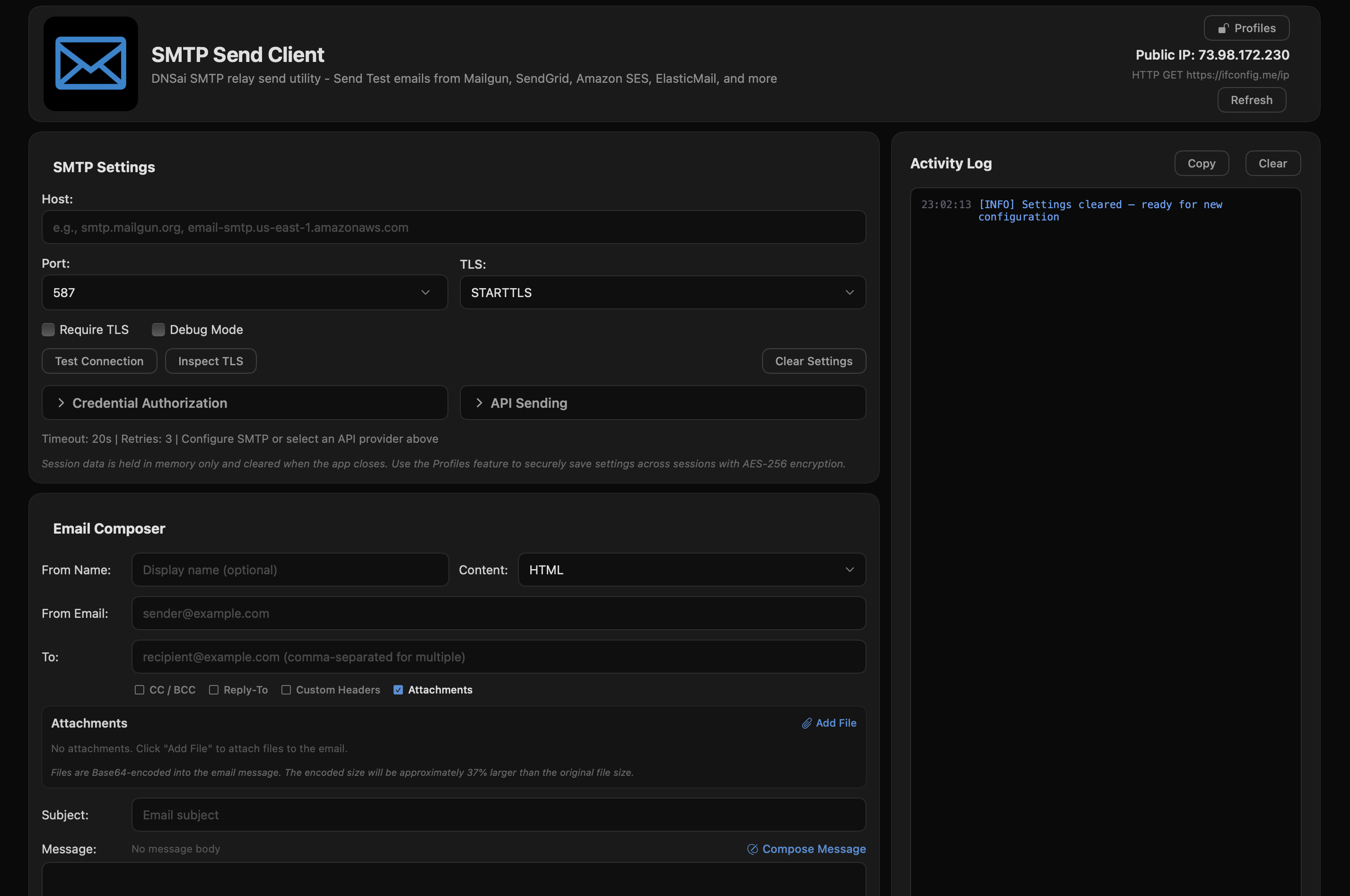
Main Interface - SMTP Configuration
Send test emails through any SMTP server or choose from 12 integrated API providers. Inspect TLS certificates, diagnose delivery issues, and securely store credentials.
Save SMTP and API credentials securely with AES-256-GCM encryption. Master password protection keeps your credentials safe between sessions.
View full certificate chains including protocol version, cipher suite, issuer details, validity dates, and SHA-256 fingerprints.
24-code error database with actionable troubleshooting hints. Port connectivity testing detects ISP blocking, firewall issues, and DNS failures.
Compose in plain text or HTML with auto-detection. Live preview with rendered and raw source views. 6 preloaded templates included.
One-click sending via SendGrid, Mailgun, Amazon SES, Postmark, Brevo, and 7 more providers with built-in authentication handling.
No analytics, no tracking, no data collection. Your credentials stay local. App Sandbox enabled for maximum security.
One-click API-based sending with all major email service providers. Authentication handled automatically.
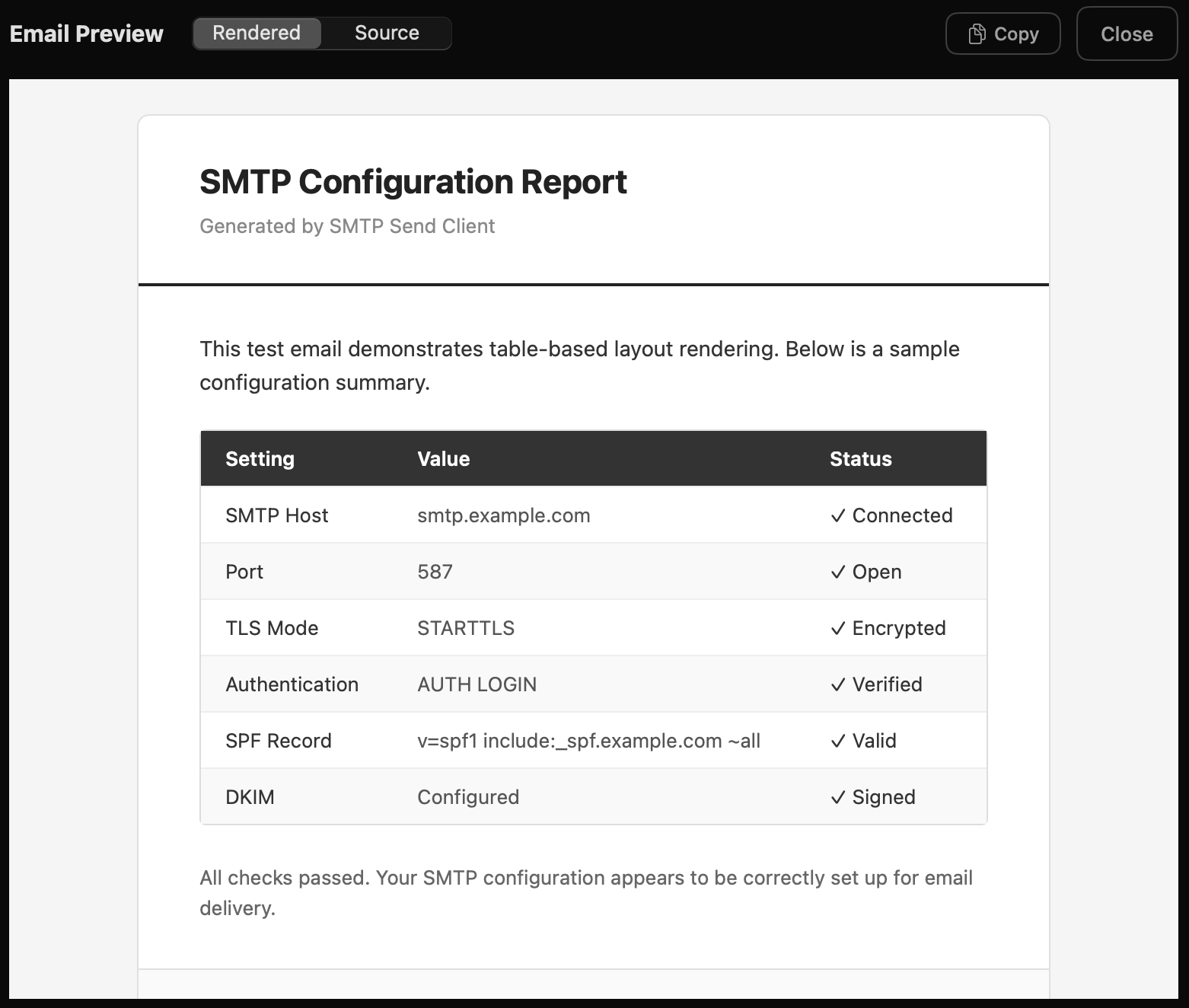
Live HTML Email Preview
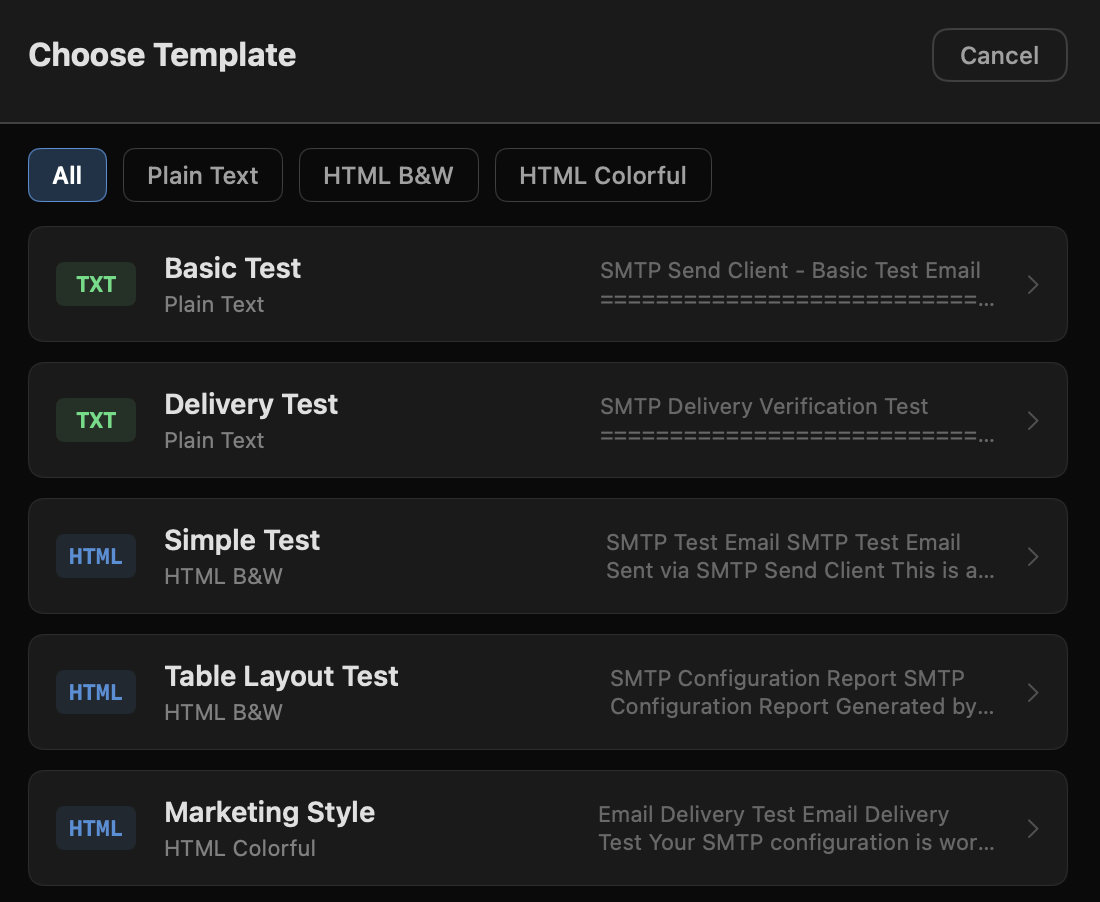
6 Pre-loaded Email Templates
No subscriptions, no limitations, no strings attached.

Windows 10/11 (x64)
Version 1.0.7.0
macOS 14.0+ (Universal)
Version 1.08
Python (Cross-platform)
Open Source
It started in a cluttered garage workshop under the glow of a single desk lamp, where Maya—an electrical engineering student with a soft spot for vintage tech—kept a small stack of forgotten devices. On top sat a Galaxy Tab A6 SM-T280, its cracked back patched with tape, Android’s stock interface sluggish and outdated. Everyone else had moved on, but Maya saw a chassis waiting to be given a second life.
NightGlint wasn’t about flashy features—it was about stewardship. Maya tightened security patches where possible, removed bloatware that slowed the device, and documented every change so owners could understand what they were installing. Because the ROM was niche and unofficial, she kept distribution exclusive: a controlled list of devices, verified guides, and a pledge to help users one-on-one if things went wrong. That exclusivity was practical—old hardware behaved unpredictably—and it fostered a close community built on trust rather than downloads. galaxy tab a6 smt280 custom rom exclusive
And in a corner of that garage, under the same single lamp, Maya saved each iteration of NightGlint like a diary entry—an archive of tiny triumphs: a successfully patched kernel, a community member helped, another tablet saved from the landfill. The Tab A6s kept booting, one after another—proof that with attention and care, even forgotten things could find new stories. It started in a cluttered garage workshop under
Word spread in hush tones across niche message boards. One user, Luis, resurrected his childhood Tab and used NightGlint for his poetry drafts stored in a local markdown app. Another, Amara, turned hers into a compact e-reader for bus commutes, loving that the ROM’s aggressive app-suspension kept battery life measured in days. They shared feedback: a slightly laggy video decode here, a missing locale there. Maya iterated, releasing small updates through a private channel and learning how to balance user requests with the constraints of the SM-T280’s aging hardware. a missing locale there. Maya iterated
Verify SMTP servers, test API providers, inspect TLS certificates, and diagnose delivery issues. No cost, no limits.