Hörbücher > Kinder
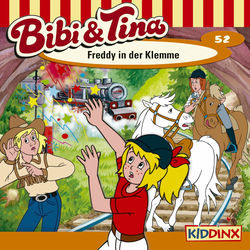
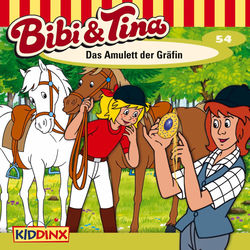
Hier siehst du die beliebtesten und besten Folgen der erfolgreichen Bibi und Tina 51-100 Hörbuch-Reihe von Nelly Sand in der richtigen Reihenfolge. Diese 5 Teile der Bibi und Tina 51-100 Hörbücher kannst du derzeit gratis auf Spotify, Deezer oder Napster hören:
Shinseki | Nokotowo Tomari Dakara 3 Link
Alternatively, the user might have made a typo or mistranslation. Let me try different interpretations. If "Shinseki Nokotō" is a name, perhaps it's a real person or a fictional character. The phrase could be explaining why they stopped, and the three links are reasons. Another angle: "shinseki" could be a misspelling of "Shinsekai" (新世界), which means "new world." If that's the case, it could be "Because the new world ended (due to Nokoto), three links." Not sure.
The phrase "tomari dakara" translates to "because it stopped" or "because it came to an end." So the whole phrase could be something like "It stopped because (something related to Shinseki in Nokotō)." Now, "3 link" at the end—maybe "link" is part of a name, a place, or a concept. Could it be related to three links in a narrative, like three parts in a story? Or maybe a play on words in Japanese? shinseki nokotowo tomari dakara 3 link
Let me consider possible scenarios. If "Shinseki" is a person's name, maybe it's a reference to a character or a story where the person stopped because of something related to Nokotō. The user might be looking for a translation or an explanation of a meme, a song lyric, or a phrase from a game. Alternatively, "Shinseki Nokotō" could be a place that's well-known for something that stopped after three links or stages. Alternatively, the user might have made a typo
Given the uncertainty, the best approach is to explain the possible translations and meanings, acknowledge the ambiguity, and ask for more context. If the user is referring to a specific cultural reference, a game, or a creative work, that's crucial to know. Alternatively, if it's a name or place, providing both possibilities based on the available breakdown of the words might help. It's important to guide the user to provide more information for a precise answer. The phrase could be explaining why they stopped,
I should also check if there are any existing references to this phrase. Maybe it's part of a song title or a book. Alternatively, it could be a pun or a play on words. Let me search for "Shinseki Nokotō 3 link" in Japanese context. Wait, "3 link" could be "3 link" in Japanese as three links, but maybe the user meant "three links" in English. There's a game called Link's Awakening, but that's a stretch. Alternatively, maybe it's part of a riddle or a joke.
Starting with the Japanese part: "shinseki nokotowo tomari dakara." Breaking it down, "shinseki" could be a name or a term. Let me check if it's a known Japanese term. "Nokoto" might be part of a place name, like "Nokotō" which is a real place in Japan (Nokotō, Ibaraki). "Tomari" means to stop, so putting it together: "Shinseki in Nokotō stopped" or "Shinseki of Nokotō stopped." But that seems a bit odd. Maybe there's a wordplay here. "Nokotō" in a name could be different from the place. Alternatively, "nokotō" might be "no koto to" meaning "about something," but that might not fit. Let me think again. "Shinseki" could be a compound word. "Shin" meaning new, "seki" as in seal or stone? Not sure.


 English
 Français